


 By
By A public dispute over whether Nigerians can lawfully record police officers on duty has drawn sharp reactions from human rights organisations and a political party, all lining up behind the position taken by the Nigerian Bar Association against restrictions on the practice.
The Dispute at the Center
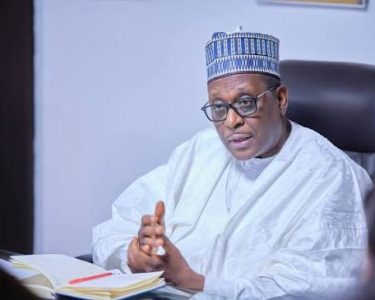
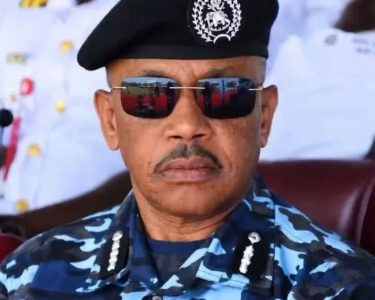
Tension has been building between NBA President Oyinkansola Badejo-Okusanya and Inspector-General of Police Olatunji Disu over how far members of the public can go in filming officers carrying out their duties.
Badejo-Okusanya has defended the right of citizens to record police in public spaces while also calling for clearer guidelines to shield officers from unnecessary intrusion into their personal lives.
Her position draws support from a March 17 ruling by the Federal High Court in Warri, Delta State, which affirmed that Nigerians have a constitutional right to film police officers performing duties in public.
Justice Hyeladzira Nganjiwa, who delivered the judgment in a case brought by lawyer Maxwell Uwaifo, also ordered police officers to visibly display their names and force numbers during public operations.
Rights Groups Rally Behind Recording
Amnesty International’s Country Director, Isa Sanusi, argued that anything obstructing transparency in policing has no valid justification.
“It is the duty of the police to tell their men to be decent, to be fair, to be open, to be transparent,” he said, adding that officers operating transparently and decently should have nothing to fear from being observed.
Gerald Katchy, General Secretary of the Committee for the Defence of Human Rights, echoed that sentiment, framing video recording as a legitimate accountability tool used widely in other democracies.
“In every other clime and in a developed nation, video recording whenever issues of security are concerned is part of the accountability we are pushing for. Those who have nothing to hide have no reason to be afraid of being recorded,” he said.
Katchy pointed out that recordings can serve as evidence in disputes involving alleged police misconduct or resistance to lawful authority, arguing the practice cuts both ways and protects officers as well as the public.
He also suggested the police force should embrace body-worn cameras to further strengthen professionalism and accountability, dismissing the idea that filming should demoralise well-trained officers. “It’s uncalled-for; maybe, IGP saying that it’s demoralising. The ones it will demoralise are those who have ulterior motives,” he said.
Political Backing and Constitutional Grounds
The African Action Congress joined the criticism, arguing that Nigerians need the ability to document their interactions with police, citing ongoing concerns about illegal checkpoints, so-called “one-chance” robberies, and criminals posing as officers.
“From ‘one-chance’ robberies to illegal checkpoints to impersonators in police uniforms, Nigerians need to record who stops them, where, and what happens,” the party said.
The AAC grounded its position in Section 39(1) of the 1999 Constitution, which protects freedom of expression along with the right to receive and share information, arguing that officers performing public duties in public spaces cannot claim privacy protections to block citizens from documenting their conduct.
A More Cautious Take
Not everyone framed the IGP’s comments as an attempt to shield officers from scrutiny.
Public affairs analyst Dr Rufus Egbagba said Disu was not instructing that misconduct go unrecorded or unreported but was instead calling for responsible engagement when filming officers on lawful duty.
Egbagba said police should be allowed to carry out their work free from unnecessary provocation or obstruction, while footage documenting alleged misconduct should still be preserved and channeled through proper reporting mechanisms, including the Police Complaint Response Unit.
He also cautioned against treating short video clips shared on social media as the full picture of any incident. “A short video clip may not always capture the full context of an incident: what led up to it, what was said off-camera, or what followed,” he said.
While acknowledging that bad actors exist within the police force and their conduct shouldn’t be excused, Egbagba warned that repeated viral circulation of misconduct by a few officers risks creating a distorted impression that such behaviour defines the entire Nigeria Police Force.
Where the IGP Stands
Disu had earlier voiced concern over what he sees as a growing trend of recording police officers, describing it as demoralising for members of the force.
Still, he acknowledged that citizens retain the right to film officers while they’re actively performing duties in public.
“We are not saying they cannot exercise their rights of recording officers in public places while doing their jobs,” he said, while urging the public not to turn police officers into content for social media skits, especially in moments when officers are off official duty.
Badejo-Okusanya, for her part, acknowledged that officers deserve some level of privacy protection, particularly when off duty, citing examples of officers being filmed while eating or relaxing as situations that could amount to a privacy violation. She drew a clear line, however, between those scenarios and the filming of officers actively carrying out official responsibilities, pointing to the introduction of police body cameras in the United States as a model for how recording can support accountability.
“When the US introduced body cams for police officers, it was to promote that,” she said, calling for clearer rules around the practice. “We just need to understand the limits,” she added.
Not the First Warning
This is not the first time Disu has raised concerns about the filming of police officers.
During an interactive session with crime correspondents in Abuja on May 31, 2026, he cautioned content creators, social media users, and the general public against indiscriminate recording and circulation of police related videos, warning that such content could undermine security operations and affect officer morale.
At the time, Disu expressed concern about the growing trend of filming police during routine and sensitive operations before posting the footage online without adequate context. “Yes, accountability is important, and we remain committed to transparency.
However, recordings and public engagements involving police officers must be done responsibly and should not be used to harass officers or undermine operational effectiveness,” he said, adding that while the Nigeria Police Force remains committed to transparency and respect for human rights, public scrutiny needs to be balanced against operational realities and officer welfare.