


 By
By Nigeria’s headline inflation has finally stopped climbing, but the relief is unlikely to be felt at the market stall.
Year-on-year headline inflation eased marginally to 15.91 per cent in June 2026, down from 15.93 per cent in May, ending three consecutive months of rising price levels, the Central Bank of Nigeria (CBN) disclosed on Tuesday at the close of its 306th Monetary Policy Committee (MPC) meeting in Abuja.
However, behind the modest improvement lies a troubling divergence. Food inflation, the component that weighs heaviest on Nigerian households, moved in the opposite direction, rising to 17.52 per cent in June from 16.96 per cent in May. This is a jump the apex bank attributed to supply constraints.
In effect, the numbers improved on paper while the cost of feeding a family worsened in practice.
The marginal decline in headline inflation was driven entirely by the non-food component. Core inflation, which strips out volatile food and energy prices, moderated sharply to 15.92 per cent in June from 16.82 per cent in May, a drop the CBN credited largely to stability in the foreign exchange market.
That exchange rate stability, a product of sustained reforms by the monetary authority, offset the pressure from rising food prices and tipped the overall index slightly downward.
Other indicators reinforced the disinflation narrative. The 12-month average inflation rate dropped to 17.63 per cent in June from 18.36 per cent in May. This marked a sixth consecutive month of moderation. On a month-on-month basis, headline inflation slowed to 1.66 per cent from 1.75 per cent, driven by the deceleration in core prices.
But the food basket tells a different story for the average household as the disinflation story rings hollow. Food inflation at 17.52 per cent means staples are rising in price faster than the overall index suggests, and faster than they were a month earlier.
The CBN pointed to supply constraints as the culprit. Though the communique offered no detail on their nature, as to whether insecurity in food-producing regions, transportation costs, or seasonal scarcity ahead of the harvest.
The divergence underscores a persistent feature of Nigeria’s inflation problem: exchange rate gains can tame imported and core inflation, but they do little for domestically grown food caught in supply bottlenecks.
Against this mixed picture, the MPC voted to retain the Monetary Policy Rate at 26.5 per cent, alongside the Cash Reserve Requirement of 45 per cent for deposit money banks and the asymmetric corridor of +50/-450 basis points around the MPR.
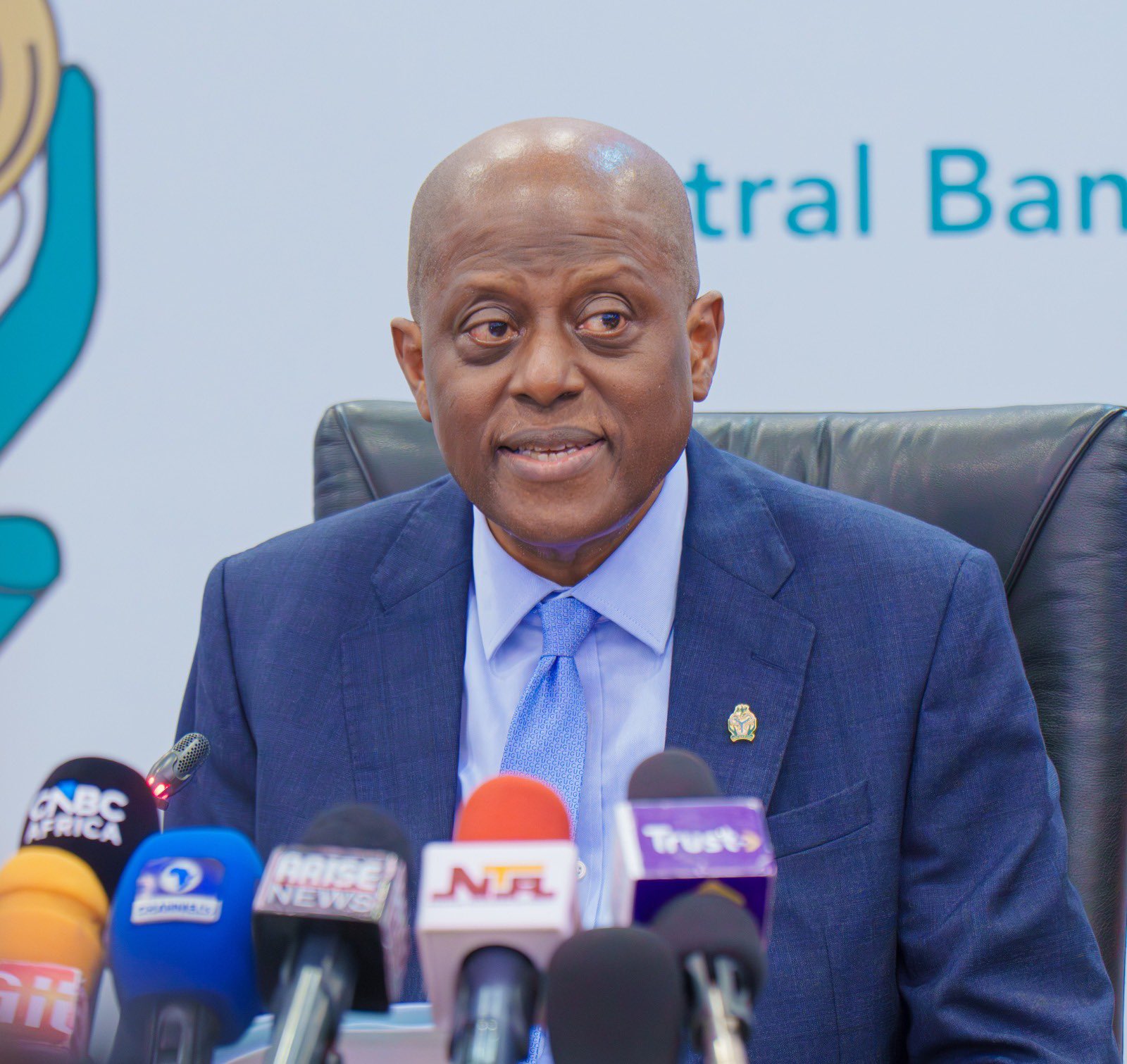
CBN Governor Olayemi Cardoso said the decision to hold followed a thorough assessment of the balance of risks, with the committee flagging renewed hostilities in the Middle East and their potential pass-through to domestic prices through global energy costs as the key threat to the outlook.
The committee expressed optimism that inflation would moderate further in the medium term, banking on continued foreign exchange stability, the lagged effect of previous tightening, and, crucially for the food component, improved supply conditions as the harvest season approaches.
Whether the harvest arrives in time to close the gap between the headline figure and the food basket remains the question Nigerian households will be asking. The MPC reconvenes on 21st and 22nd September 2026.