

 By
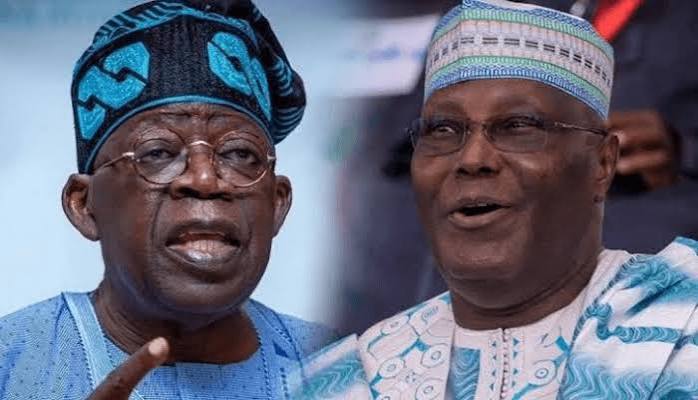
By President Bola Tinubu used a policy forum in Abuja on Tuesday to make his case for a $1 trillion economy by 2030, while former Vice President Atiku Abubakar used the same day to ask why Nigerians had to wait three years for the government to start promising relief. The exchange, playing out at the second edition of the Asiwaju Scorecard Series and Policy Roundtable and through a written rebuttal from Atiku’s camp, captured the shape of a 2027 contest already taking form around one question: whether economic reform justifies the years of hardship it demanded.
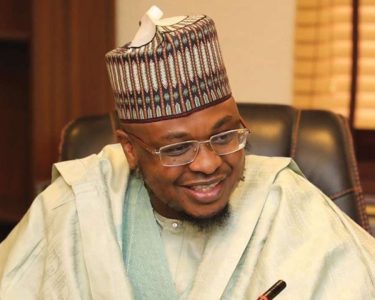
Tinubu, represented at the event by APC National Chairman Prof Nentawe Yilwatda, argued that the reforms had built a genuine foundation for growth, pointing to improved reserves, stronger revenue mobilisation and a turnaround in trade performance. He framed the difficult decisions of his early presidency as unavoidable given what he inherited. “When President Bola Ahmed Tinubu assumed office on 29 May 2023, Nigeria faced a difficult economic inheritance. We had fuel subsidy distortions, multiple exchange-rate windows, weak revenue mobilisation, foreign-exchange shortages, rising debt-service pressures and years of inadequate investment in critical infrastructure,” Yilwatda said on his behalf, describing the removal of fuel subsidy and the foreign-exchange reform as the response to that inheritance.
The numbers he cited were meant to show the strategy working. Gross external reserves have climbed to about $52.7 billion as of August 2026, he said, while consolidated non-oil revenue rose from roughly ₦13.63 trillion in 2023 to ₦16.4 trillion in just the first two quarters of 2026. Nigeria’s trade position, he added, has swung from a merchandise trade surplus of only about ₦44.8 billion for all of 2023 to approximately ₦7.54 trillion in the first quarter of 2026 alone, with real GDP growing 4.43% in the second quarter and inflation easing to about 15.4% from its earlier peak. Yilwatda was careful to frame these as a foundation rather than an endpoint. “These figures do not mean that our economic challenges have disappeared, but they demonstrate that the direction of travel has changed,” he said, adding that “macroeconomic stability is not the destination; it is the foundation. The ultimate test is when stability translates into cheaper food, more jobs, affordable credit, reliable electricity and greater purchasing power for Nigerians.”
Tinubu tied that foundation to a much larger ambition than balance sheets alone. He described the push for a $1 trillion economy as “not merely a number, but a national mission,” one requiring a country that produces more, exports more, attracts investment and gives young Nigerians a stake in the future. That mission, he said, rests on infrastructure: an integrated five-port maritime and logistics corridor connecting deep-sea ports at Lagos, Ondo, Ibom, Port Harcourt and Calabar via modern rail and road networks, anchored by the Lagos-Calabar Coastal Super Highway. From there, he outlined a Western Corridor running through Lagos, Abuja, Kaduna and Kano to open trade routes toward the Sahel, and an Eastern Corridor linking Port Harcourt, Abuja, Kaduna and Kano, complemented by a proposed Calabar-Maiduguri Trans-Sahara Super Highway. The goal, he said, is a transport network stretching all the way to landlocked markets in Niger, Chad, Burkina Faso, Sudan and the Central African Republic, positioning Nigeria as the region’s maritime and logistics hub rather than just a coastal trading nation.
He framed the vision as more than concrete and steel. “That is more than transportation infrastructure, but a trade architecture,” Tinubu said, arguing it would create opportunity across logistics, warehousing, freight forwarding, customs, banking, insurance, manufacturing and agro-processing. He tied gas infrastructure, particularly the Ajaokuta-Kaduna-Kano pipeline, to powering industrial growth in the north, and pointed to NELFUND, vocational training grants, digital skills programmes and the CREDICORP credit initiative as investments in the young people he called Nigeria’s greatest economic asset.
Dr Isa Yuguda, Chairman of the APC Professionals Forum’s Board of Trustees, used his remarks at the same event to defend the subsidy removal on historical grounds, drawing on his experience chairing the 2009 Fuel Subsidy Task Force, which he said exposed widespread fraud in the old system. He credited the reform with saving over ₦15 trillion for education, security, agriculture and infrastructure, and warned pointedly against reversing course. “The proposal by former Vice President Alhaji Atiku Abubakar to restore subsidy may appear attractive to citizens seeking immediate relief, but it must be examined against our national experience,” he said, cautioning that “presenting a return to that system without clearly addressing these problems risks misleading Nigerians for short-term political gain and could reverse the fiscal space now supporting critical national investments.”
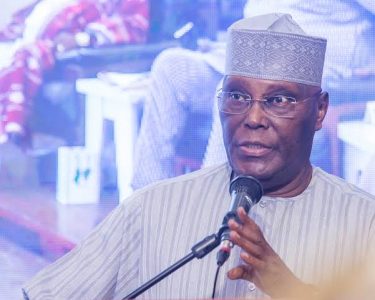
Atiku’s response, delivered through a statement from his Senior Special Assistant on Public Communication, Phrank Shaibu, rejected the framing entirely. Titled “Tinubu, the issue is not Atiku, it is why Nigerians can no longer afford to live,” the statement insisted the real subject wasn’t a personal rivalry but ordinary Nigerians’ inability to afford basic necessities. “Atiku has more important people to engage directly: the mother struggling to feed her children; the civil servant whose salary disappears into transportation; the farmer paying more to move produce to market; the student being pushed into debt simply to remain in school; and millions of Nigerians whose daily reality bears no resemblance to the prosperity advertised in your tweets,” Shaibu said.
The statement zeroed in on the timing of the government’s newer promises around cheaper transport and food relief, treating it as an admission of delay rather than progress. “Why did Nigerians have to suffer for more than three years before your government discovered that economic growth must reach ‘the dining table and the pocket’? Why is intervention backwards when Atiku proposes it, but progressive when you announce it?” Shaibu asked. Atiku’s camp argued that cutting energy costs would ripple outward, lowering the price of moving goods and, in turn, the price of food itself. “The economics is straightforward. Reduce fuel costs, and you reduce pressure on transportation. Reduce transportation costs, and you reduce the cost of moving tomatoes, rice, yam, livestock and manufactured goods,” the statement said, describing the Atiku Economic Recovery Plan as built around capped, transparently budgeted support for domestically refined crude, complete with tracking mechanisms and a consumer pass-through system meant to ensure the savings actually reach the public. The aim, Shaibu said, was “structural relief” rather than letting costs rise unchecked before offering temporary fixes.
The statement also took direct aim at NELFUND, accusing the government of driving up education costs and then presenting student loans as the solution. “Celebrating NELFUND as proof that education has become affordable under your government is like setting school fees on fire and then boasting that you lent students a bucket of water,” Atiku said, dismissing warnings that cheaper fuel would threaten the loan fund or wage levels as “fearmongering dressed up as economics.” He said he would look to reduce the underlying cost of education and consider forgiveness for qualifying student debts, framing the current arrangement bluntly: “A student loan is not a scholarship. It is a liability.”
Atiku pressed further on where the financial gains from subsidy removal had actually gone, noting the Federal Government’s own figure of roughly ₦15.8 trillion mobilised between June 2023 and December 2025 and asking what measurable benefit ordinary Nigerians have seen in return. His camp renewed calls for a reconciliation of about ₦30 trillion in Federation Account revenues, deductions, savings and transfers, and demanded disclosure of the beneficiaries and legal basis behind Import Duty Exemption Certificates covering roughly ₦34 trillion in imports in 2025. The statement closed by casting doubt on the sincerity of the government’s newly promised relief altogether, suggesting it could amount to “a temporary dose of political anaesthesia as 2027 approaches,” and urging Nigerians to separate election-season gestures from lasting economic recovery.