

 By
By EFCC Breaks Silence
The Economic and Financial Crimes Commission has broken its silence on the freezing of Osun State’s government account, insisting the move was a lawful, preventive step taken to stop what it described as suspicious movement of public funds. The Osun State Government has rejected the claim, setting up a fresh flashpoint just over a week before the state’s August 15 governorship election.
In a statement titled “Why EFCC Froze Osun State’s Government Account,” the commission said it had been investigating the state government since March 2026 over the alleged fraudulent handling of about N11 billion drawn from Ecology Funds, Intervention Funds, and the Federation Account Allocation Committee allocation. According to the statement, some state officials, notably the state’s Accountant General, had already been interviewed by its investigators as part of that probe.
According to the commission, the investigation alone would not have justified placing a post-no-debit order on the account, but the situation changed after it observed a precipitate and unwarranted movement of funds out of the account into various corporate accounts beginning August 2, 2026. According to the statement, the commission acted swiftly to halt large transfers it noticed going into different corporate entities, framing the freeze as a preventive measure rather than a punitive one.
According to the EFCC, its mandate is to safeguard public funds and assets, and it could not stand by while a state government account was being depleted. The commission said it was aware of the approaching election but maintained that the timing of the vote could not be used as grounds to suspend its statutory duties. It added that other states besides Osun remain under its investigative watch, describing itself as non-partisan and stating that the freeze was solely aimed at protecting public funds. The public was urged to disregard what the commission called false narratives around its operations.
The 72-Hour Rule
According to a separate statement reported by Punch, the EFCC has said it can lawfully freeze an account for up to 72 hours without a prior court order, citing the emergency stop order provision under the Money Laundering (Prevention and Prohibition) Act. Legal experts broadly confirm this reading of the law. Section 7(6) of the Act permits a temporary stop order of up to 72 hours without judicial authorisation, but any restriction beyond that window requires an interim freezing order from a court, typically under Section 34 of the EFCC Act.
According to reports, the restriction on Osun’s account was formally communicated in a letter dated August 5, 2026, directing First Bank to place a post-no-debit restriction on the state’s statutory allocation account pending the conclusion of investigations. According to the report, the letter was signed by an Assistant Commander of the EFCC on behalf of the commission’s Director of Investigation.
Lawyers Question the Freeze
The account freeze has drawn sharp criticism from within the legal community. According to the Nigerian Bar Association, the EFCC lacks constitutional authority to impose a blanket restriction on a state government’s finances without a valid court order, and several senior lawyers have echoed that position.
According to Senior Advocate of Nigeria Wolemi Esan, a stop order of up to 72 hours under the Money Laundering Act would not require prior court approval, but any continuation beyond that period would need an interim freezing order from a competent court. According to another senior lawyer, Chief Mike Ahamba, he was unaware of any legal provision empowering the Federal Government or the EFCC to freeze a state’s account outright, and he suggested the matter should be tested in court. According to a third senior advocate, Adeyinka Olumide Fusika, Nigerian courts have consistently held that anti-graft agencies cannot restrict accounts without judicial authorisation, and he noted that while EFCC restrictions on individual accounts are routine, action against an entire state government’s account carries broader constitutional implications.
Political Reactions Split
The freeze has also triggered a political reaction. According to reports, opposition parties including the African Democratic Congress, Labour Party, Nigeria Democratic Congress, Social Democratic Party and Young Progressives Party have condemned the move, alleging it could undermine democratic governance so close to the governorship election. According to the same reports, the ruling All Progressives Congress has backed the EFCC’s action, arguing the commission should be allowed to carry out its statutory duties without political interference.
Osun Government’s Rebuttal
The EFCC’s explanation contradicts a statement from the Osun State Government, which dismissed the N11 billion looting allegation entirely. According to a release issued by the Commissioner for Information and Public Enlightenment, Oluomo Kolapo Alimi, the state government instead accused the EFCC of freezing the account on the instruction of former Governor Gboyega Oyetola, alleging the real intent was to obstruct payment of palliatives promised to state workers.
According to the state government, it had since gone ahead to pay the palliatives, and its finances are fully accounted for with no surplus funds to loot. According to the same statement, the government pointed to awards it says it has received for budget and auditing transparency as evidence against the looting claim, and it described the EFCC’s public explanation as a politically motivated afterthought that would not withstand scrutiny. According to the statement, the commission has investigated the state since March without producing indicting evidence against top officials.
The state government’s position was reinforced separately by its Attorney-General and Commissioner for Justice, Oluwole Jimi-Bada, SAN, who addressed journalists in Osogbo on Wednesday following reports of the freeze. According to Jimi-Bada, the EFCC lacks the legal authority to freeze or restrict access to Osun State’s statutory account domiciled with FirstBank, and the reported action raises serious constitutional questions.
According to Jimi-Bada, Governor Adeleke has directed him to approach a court to seek an interpretation and determination of the legal issues surrounding the commission’s action. He said the state government recognised and respected the statutory mandate of the EFCC and other lawful institutions, and stressed that the planned legal challenge was not an attack on any individual, government, agency or political party but a legal position taken in the interest of constitutional order and due process.
According to the attorney-general, Section 24 of the Money Laundering (Prevention and Prohibition) Act and Section 38 of the EFCC Act, 2004, do not confer powers on the commission to freeze, restrict or interfere with a state government’s statutory account. He argued that the funds in the account are public resources meant to finance core government responsibilities, including salaries, pensions, healthcare, education and security, and said any restriction on such funds raises constitutional questions that ought to be determined by a court of competent jurisdiction.
Jimi-Bada added that the state government was not opposed to lawful investigations and remained committed to transparency, accountability and cooperation with relevant law enforcement and regulatory agencies, but said the planned court action was meant to obtain judicial clarification on the scope of the EFCC’s powers. According to the report, he urged residents and other stakeholders to remain calm, assuring them the matter would be resolved through lawful judicial processes.
Adeleke Ties Freeze to Campaign Message
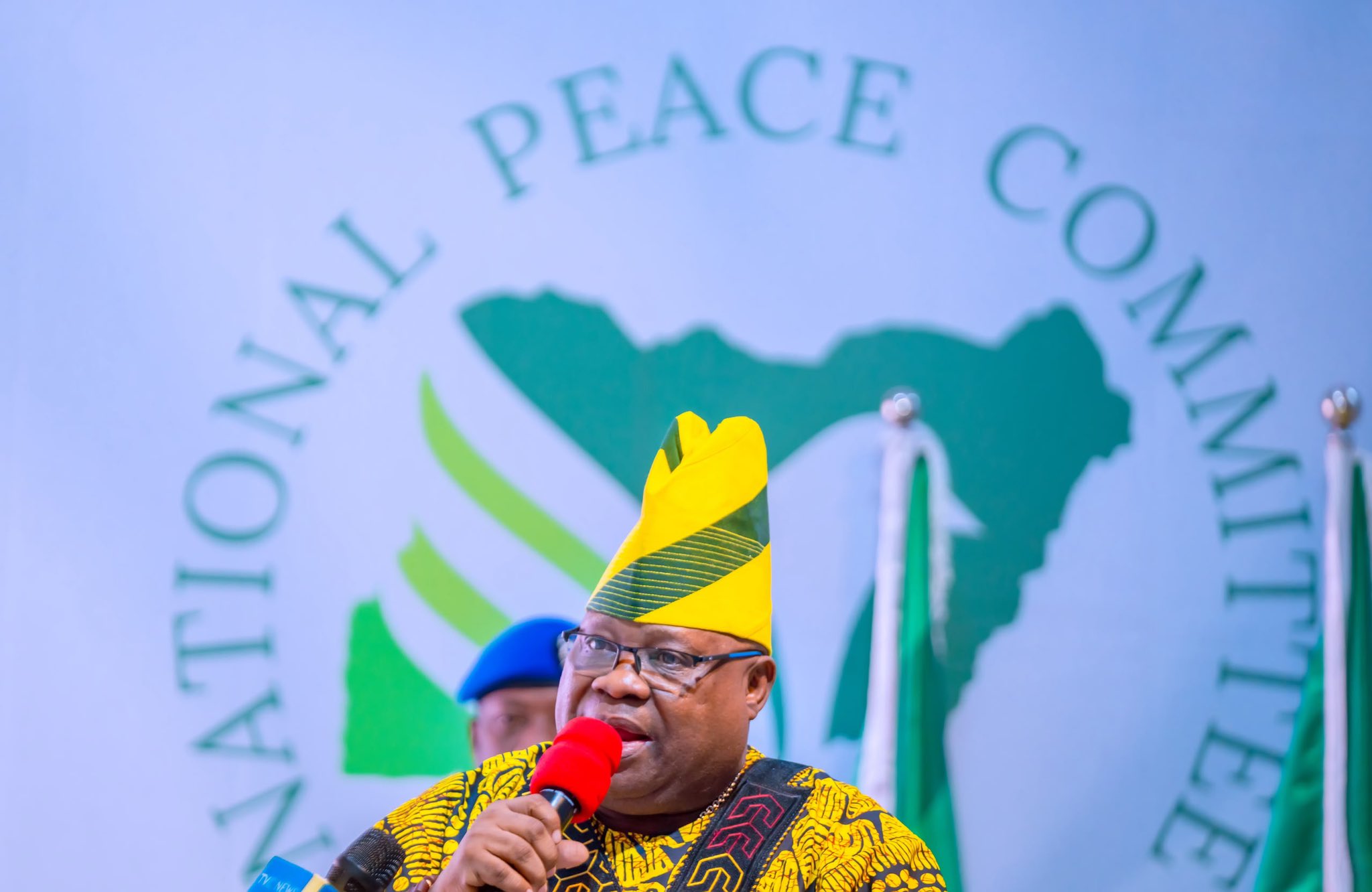
Hours before the EFCC’s statement, Governor Ademola Adeleke had already referenced the frozen account in a campaign appeal to voters. According to the governor, the freeze was unjust, and an APC return to power would bring back a period of unpaid and half-paid civil servant salaries.
He urged voters to use the August 15 election to endorse what he called a path of progress and good governance over the APC.
What Remains Disputed
At the centre of the dispute are two competing accounts that AfrikTimes has been unable to independently verify. According to the EFCC, the freeze followed suspicious, large-scale transfers out of the state account beginning August 2, 2026, tied to an existing investigation into an alleged N11 billion fraud involving ecological, intervention, and FAAC funds. According to the Osun State Government, there was no looting, the account holds no surplus funds, and the former governor’s camp orchestrated the freeze specifically to stop palliative payments to workers.
Legal opinion also remains divided on whether the EFCC’s action, if extended beyond the initial 72-hour window, was backed by the necessary court order, a question likely to be tested in court in the coming days according to lawyers who have weighed in on the matter.
Election Context
The dispute unfolds just over a week before Osun’s governorship election on August 15, in which incumbent Governor Adeleke of Accord faces APC’s Bola Oyebamiji and twelve other candidates. It follows a heavy security deployment announced earlier this week and adds to an already charged pre-election atmosphere between the two leading camps.
According to this report, it draws on an official EFCC statement, comments attributed to the EFCC and reported by Punch Newspapers, legal commentary from the Nigerian Bar Association and senior lawyers as reported by Punch and Ben Television, remarks by Osun State Attorney-General Oluwole Jimi-Bada as reported by DailyNigerian, and statements from the Osun State Government and Governor Ademola Adeleke. AfrikTimes has been unable to verify the disputed claims independently and will update this report as further details emerge.