


 By
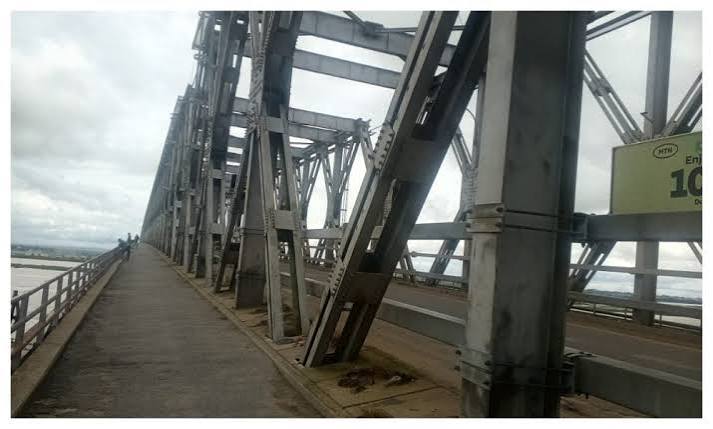
By The Federal Government has ordered a two-week closure of the First Niger Bridge in Onitsha, Anambra State, to allow for urgent rehabilitation work on the deteriorating structure.
The Ministry of Works’ Anambra State Field Headquarters announced the shutdown in a statement Friday, signed by Acting Federal Controller of Works Timothy Emenike, confirming that the bridge, a key link between Anambra and Delta states, will close completely to traffic from Monday, September 7, 2026, and reopen Monday, September 21, 2026.
Why the bridge is closing
The government pointed to a bridge in visibly poor condition, citing damage to the carriageway surface and vandalism affecting critical components, including sections of the expansion-joint steelwork and the nuts and bolts holding the stanchions and steel truss together.
Minister of Works David Umahi reportedly raised the alarm himself during a recent working visit to Anambra State, expressing serious concern over what he found and ordering emergency maintenance to begin immediately.
Following that directive, the statement said, contractor Messrs SKECC, already handling the Km 0+000 to Km 20+000 section of the Onitsha-Enugu Dual Carriageway, has been instructed to move quickly on repairs.
What the repairs will involve
The work centers on removing the existing deteriorated asphalt and laying roughly 40mm of new wearing course, alongside other structural and safety repairs.
Beyond the road surface itself, the ministry said the project will include installing solar-powered streetlights and CCTV cameras, along with the traffic-control and diversion infrastructure needed to manage the closure.
The stated goal is a safer, smoother and more durable bridge that eases the traffic congestion that has built up around the corridor.
How motorists should plan around the closure
With the bridge shut, the ministry is directing all traffic toward the Second Niger Bridge via Obosi, connecting to Asaba and points beyond in Delta State.
To support that diversion, officials say they’ll deploy road signs, safety barriers and traffic-control personnel throughout the closure period, alongside broader security cooperation to keep the flow of vehicles orderly.
Motorists have been urged to obey temporary signage, approach construction zones cautiously, cut speed, avoid reckless overtaking and follow instructions from traffic and security personnel on the ground.
The ministry is also asking travellers to build extra time into their journeys and, wherever possible, treat the Obosi-Asaba route as the default alternative for the duration of the works.
Construction crews are expected to work around the clock, day and night, to complete the job within the two-week window and keep the disruption as short as possible. “The temporary inconvenience is highly regretted.
However, the intervention has become necessary in the overriding public interest, particularly to restore the First Niger Bridge to a safer and more efficient condition and to improve the free flow of traffic along this critical national transportation corridor,” the ministry said, thanking road users, residents and businesses in advance for their patience.