

 By
By The Federal Government is considering a major overhaul of Nigeria’s secondary education system by removing the distinction between junior and senior secondary schools, a move aimed at keeping more children in school and improving completion rates.
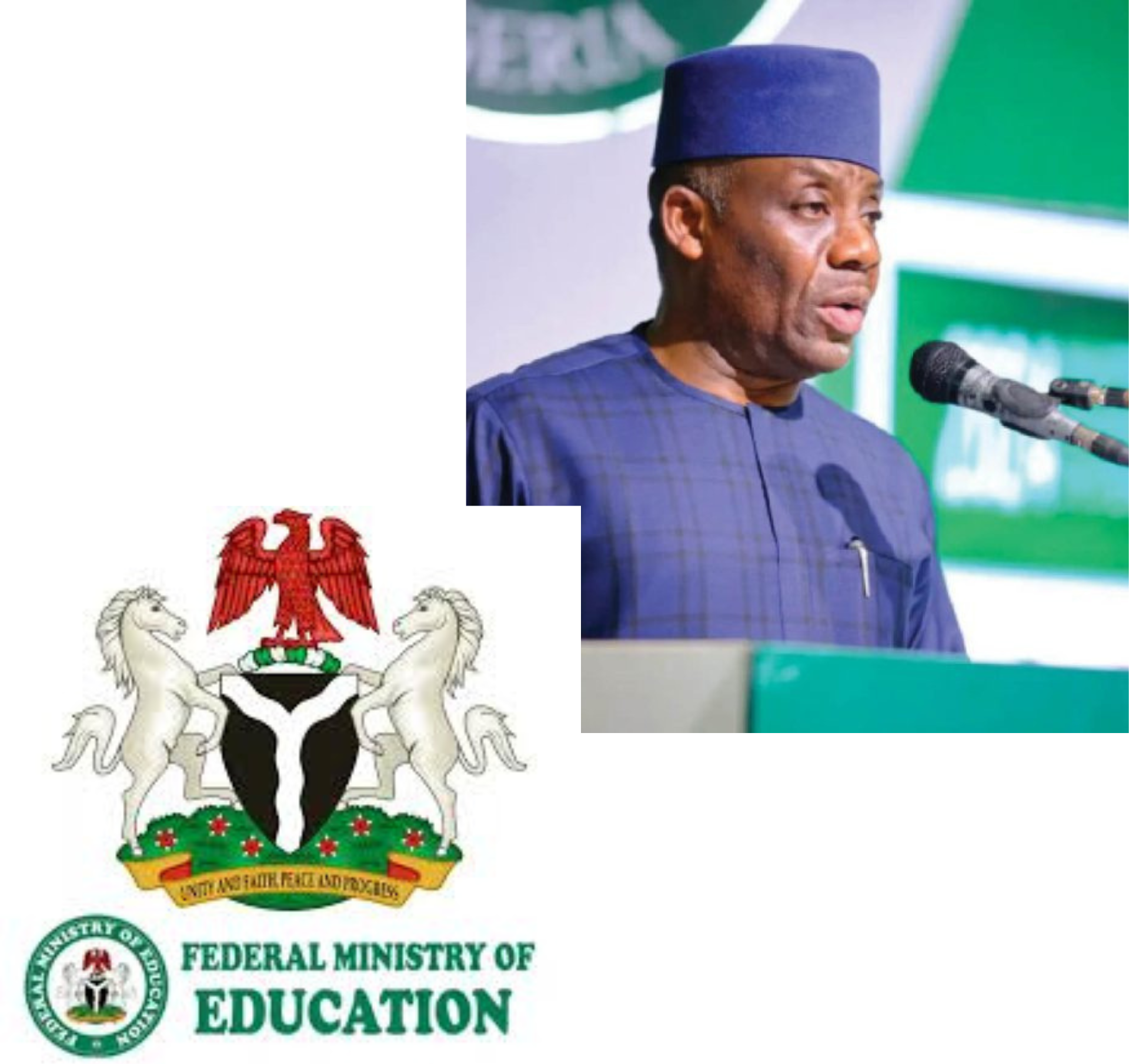
The proposal was unveiled by the Minister of Education, Tunji Alausa, during the inauguration of the Ministerial Implementation and Monitoring Committee of the Universal Basic Education Commission (UBEC) in Abuja.
If approved by the National Council on Education (NCE), the country’s highest education policy-making body, the reform would eliminate the current transition between Junior Secondary School (JSS) and Senior Secondary School (SSS), which education officials believe has become a major point where many students leave the school system.
The minister said the government is concerned by the sharp decline in student numbers after primary education. He explained that although about 24 million pupils are enrolled in public primary schools across the country, only around four million eventually complete senior secondary education.
He attributed part of the challenge to the imbalance in educational infrastructure, noting that Nigeria has more than 80,000 public primary schools but only about 15,000 junior secondary schools. The shortage, he said, has placed enormous pressure on existing junior secondary schools while many senior secondary schools remain underutilised.
The proposed restructuring forms part of broader efforts to address Nigeria’s persistent out-of-school children crisis, which remains one of the largest globally despite several intervention programmes introduced in recent years.
Beyond the structural changes, the Federal Government is also strengthening education data management through the Learner Identification Number (LIN), a system designed to give every student a unique academic identity from enrolment through graduation.
Authorities are equally preparing to deploy the Digital National Education Management Information System (DNEMIS), a unified database expected to improve planning, monitoring and policy implementation across the education sector.
According to the National Project Coordinator of the Special Programmes Operations and Implementation Unit in the Office of the Minister of Education, Adebayo Onigbanjo, the platform has already captured more than 32 million students nationwide.