

 By
By - Four consecutive days of heavy rainfall leave homes, roads and bridges damaged across seven local government areas in Osun State, with over 1,000 houses affected statewide and roughly 50 in Ijetu, Osogbo alone
- Governor Adeleke orders an environmental task force to assess the damage, while urging residents to stop dumping refuse and building on waterways
- NGO Urban Alert and ADC governorship candidate Najeem Salaam both issue public calls for government intervention, as NiMet warns the rains are far from over
What started as a run of heavy rain has turned into a sprawling flood crisis across Osun State, with four straight days of downpour tearing through homes, roads and bridges in seven local government areas and leaving residents across the state counting losses that, by one estimate, now run past a thousand houses.
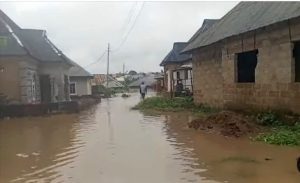
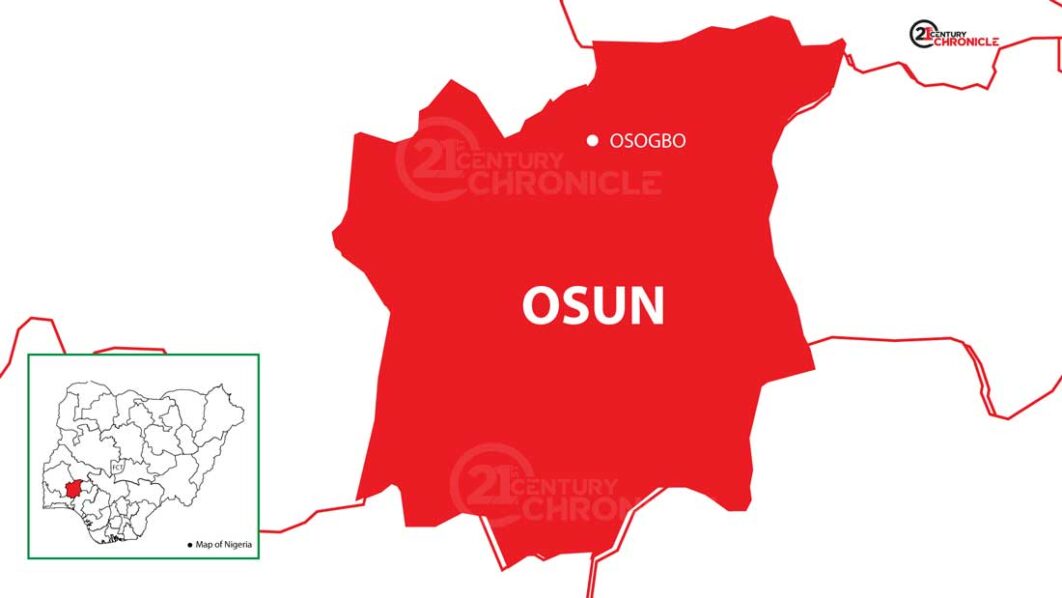
The damage is most visible in Osogbo, where erosion has eaten into streets and sent floodwater pouring into residential neighbourhoods. In the Ijetu area alone, roughly 50 houses have been swallowed by rising water, according to the NGO Urban Alert, forcing families to abandon their homes and move belongings to higher ground. Footage from the area shows water submerging a hotel fence along Fountain University Road, showing how far the flooding has spread beyond its original banks.
Beyond Ijetu, Urban Alert’s own assessment names a wider list of affected neighbourhoods, Ayekale, Ayegbaju, Baruwa, Famson, Oke Baale, Sasa and Ilesa Garage, painting a picture of flooding that has moved well past a single pocket of the city. In Ilesa, the Ora River overflowed its banks and swamped Muroko Road, while the bridge connecting Ijaregbe to Ilesa sustained damage severe enough to cut off movement between the two communities. A separate bridge in Kuti, Iwo, suffered similar damage, further isolating residents in that area.
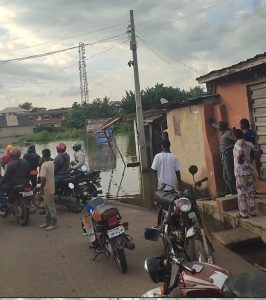
In total, seven local government areas have registered flood damage: Atakunmosa West, Ilesa West, Obokun, Osogbo, Olorunda, Iwo and Ifelodun. In Osunjela, within Atakunmosa West, residents lost personal property outright, while the Ijaaregbe-Ilesa bridge damage has compounded transport difficulties already affecting the area. No deaths have been reported as of the latest count, a detail officials and residents alike have been careful to note even as property losses mount.
A Government Response Focused on Assessment, Not Yet Relief
Governor Ademola Adeleke addressed the crisis through a statement from his spokesperson, Olawale Rasheed, expressing concern over the toll on homes, businesses and livelihoods and directing the state’s Special Task Force on Environmental Sanitation, led by Elder Ayanleye Aina, to visit affected communities and prepare a response plan. Adeleke pointed to dredging and drainage work his administration had already carried out as part of its flood prevention efforts, while stopping short of announcing immediate relief measures for displaced families.
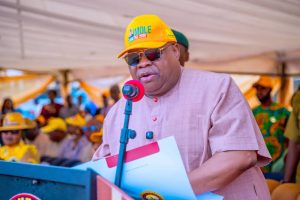
The governor placed noticeable emphasis on resident behaviour as part of the problem, urging Osun indigenes to stop dumping refuse on waterways and roadsides and to avoid constructing buildings on natural water channels and flood-prone corridors. He argued that government intervention alone cannot solve the flooding if those channels remain blocked by ongoing human activity, and asked residents to report blocked drains and emerging flood risks to the appropriate authorities.
Civil Society and Opposition Figures Press for More
Urban Alert’s public statement went considerably further than the government’s own messaging, framing the flooding as a threat not just to property but to livelihoods, access to essential services and the safety of vulnerable residents. The organisation called on the state government and emergency agencies to move beyond assessment and provide immediate relief to displaced residents, including temporary shelter where needed, alongside clearing and repairing damaged drainage, roads and bridges.
Looking past the immediate crisis, the group pushed for a dedicated flood-management and early-warning system for the state, one built around proper drainage planning, regular maintenance, and consistent community involvement in flagging risks before they turn into disasters. It framed this as a shared responsibility, calling on residents to report blocked channels and vulnerable infrastructure while asking government agencies to be transparent about what actions are actually being taken in response.
Dr Najeem Salaam, the ADC’s candidate in Osun’s August 15 governorship election, added his own voice to the response, issuing a personal statement expressing solidarity with flood victims and praying for their recovery.

His statement, while largely sympathetic rather than policy-focused, cited the figure of more than 1,000 houses affected statewide, a notably higher count than the localised damage reported in Ijetu alone, suggesting the true scale of the crisis extends well beyond what individual community reports have captured so far.
More Rain on the Way
Compounding the pressure on both residents and government agencies, the Nigerian Meteorological Agency has warned that rainfall will continue across central and southern Nigeria, regions currently at the peak of the rainy season. A NiMet official cautioned that the agency’s seasonal forecast gives no indication the rains will ease before the end of September, urging residents to keep monitoring daily forecasts rather than assume the worst has passed.
The National Emergency Management Agency has responded by deploying rescue teams to flood-affected states and activating its operational offices in response to recent flood alerts. NEMA’s Head of Media and Public Relations, Manzo Ezekiel, said the agency would maintain its posture given that the rainy season remains active, a signal that further flooding and further displacement remain a live possibility in the days ahead.
For residents already dealing with submerged homes, severed bridges, and lost belongings, the overlapping warnings from NiMet and NEMA leave little room for relief. With government response still largely in the assessment phase and civil society pushing for faster, more concrete action, the coming days will likely determine whether Osun’s flood response moves from damage control to genuine prevention or whether the state finds itself counting losses all over again.