



 By
By A few days ago, reports circulated widely that the *303# code used for borrowing airtime and data credit from telecom providers in Nigeria, particularly MTN and Airtel, had been banned by the Federal Competition and Consumer Protection Commission (FCCPC). The claim sparked concern among subscribers who rely on Xtratime services to stay connected during financial constraints.
Before the disruption, the Xtratime services typically attracted a 15 per cent service charge. For instance, a ₦500 airtime or data request would incur a ₦75 fee, leaving the user with ₦425. In a situation where one needs the exact #500, one would be compelled to request nothing less than #590, while repayment is automatically deducted upon the next recharge.
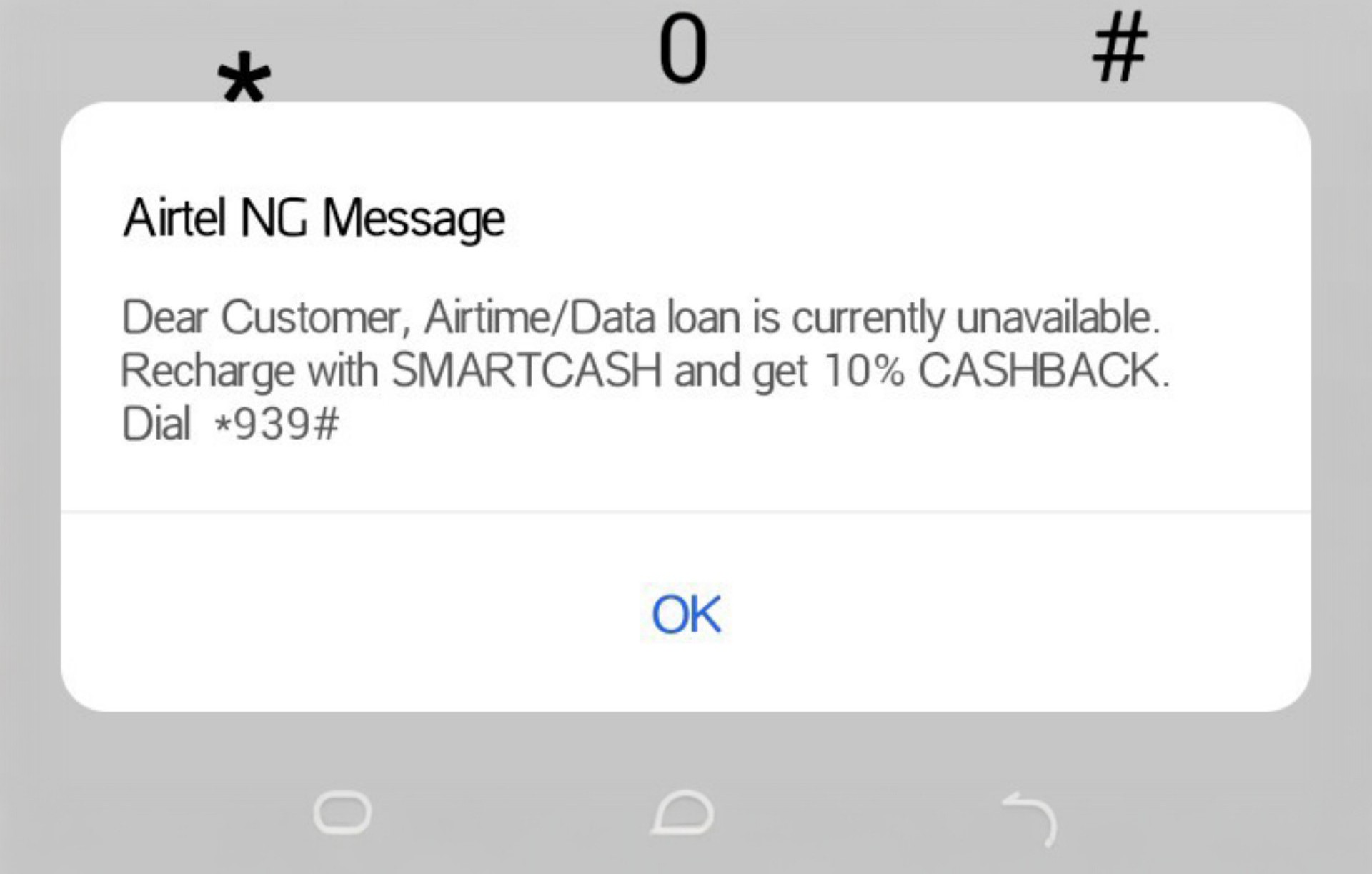
However, the FCCPC has debunked the claim, stating unequivocally that it did not impose any ban on airtime or data advance services.
“The Commission has not prohibited airtime borrowing or data advance services, and no directive was issued preventing consumers from accessing lawful telecom value-added services,” the statement read.
Providing context, the Commission explained that its regulatory intervention stems from a wave of consumer complaints over exploitative practices in the digital lending and advance-services space. These concerns include opaque charges, unexplained deductions, aggressive recovery mechanisms, and poor disclosure standards.
To address these issues, the FCCPC introduced the DEON Consumer Lending Regulations in July 2025, aimed at sanitising the sector and protecting consumers from abusive practices.
According to the Commission, the framework mandates proper registration of operators, transparency in fees and terms, responsible lending conduct, data protection safeguards, and the establishment of accessible complaint channels for consumers.
The FCCPC further disclosed that investigations within the telecom sector revealed that some operators were operating exclusionary third-party arrangements in violation of the Federal Competition and Consumer Protection Act, 2018.
“The Regulations were introduced to curb the excesses of abusive service providers whose practices had generated persistent consumer harm and undermined confidence in the market,” the Commission stated.
It added that the new rules are designed to open up the market, allowing for fair competition between local and foreign participants, while also promoting innovation and consumer choice.
Despite these provisions, the Commission noted that several operators failed to comply within the stipulated timelines. An initial 90-day compliance window granted in July 2025 was not utilised, prompting an extension until January 5, 2026. Yet, the required adjustments were still not made.
“Notwithstanding clear regulatory requirements, some operators chose to maintain the status quo, continuing to operate models that had long generated consumer complaints,” the statement added.
The FCCPC emphasised that any disruption in airtime or data advance services should be attributed to decisions made by the telecom operators themselves, not to regulatory action.
“Any temporary suspension, restriction, or operational change introduced by service providers should therefore be understood as a business or compliance decision by those operators, not a ban imposed by the FCCPC,” it clarified.
The Commission also warned against what it described as a deliberate campaign of misinformation by certain vested interests resisting regulatory reforms.
“Attempts to misrepresent temporary service inconvenience as the result of lawful consumer regulation are mischievous. Nigerians deserve accurate information, not sensational claims,” the statement noted.
Nigerian have therefore been urged to disregard misleading narratives surrounding the issue, as the Commission reaffirmed its commitment to a fair, transparent, and accountable marketplace for all service users.